Your jaw joints play a central role in every bite and word you speak. When they become inflamed, we provide comprehensive evaluations and conservative therapy to restore comfortable function and get you out of pain.
Finding the right solution for facial pain requires understanding exactly what is causing it. We evaluate your joint health, muscle function, and bite alignment to build a personalized therapy plan. We help you by:
Alleviating chronic pain, headaches, and muscle tension around your jaw.
Addressing painful clicking, popping, or locking when you open your mouth.
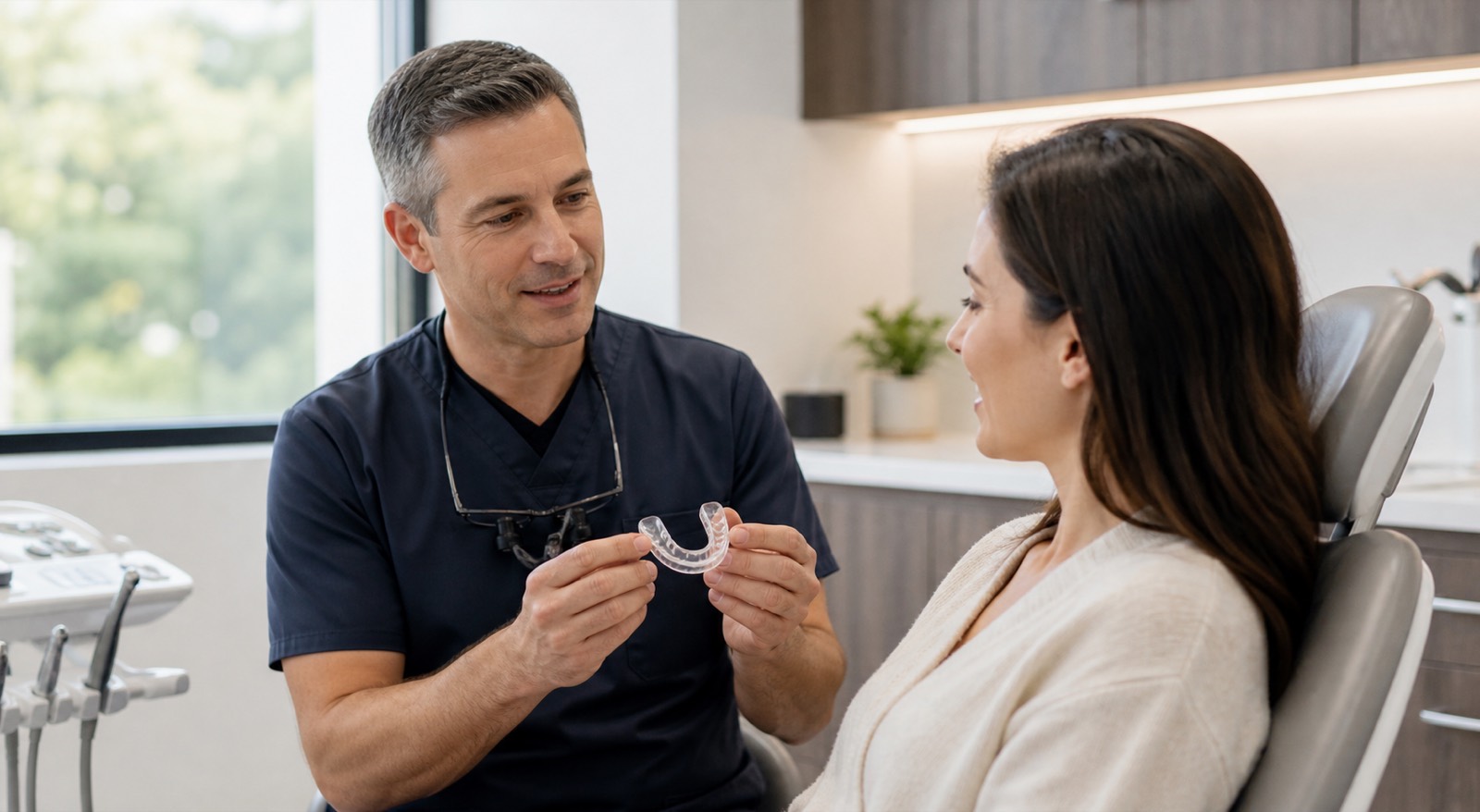
Utilizing conservative approaches like oral appliances and habit changes first.
Protecting your teeth from further wear and fracture while the joint settles.
Comparison
Muscle Pain vs. Joint Pain in TMD
Source of Pain
Common Symptoms
How We Evaluate It
Muscle-Based
Dull, aching pain in the cheeks or temples, usually worse in the morning
Palpating the chewing muscles to identify tenderness and tension
Joint-Based
Sharp pain right at the jaw hinge, accompanied by clicking or locking
Listening to the joint during movement and reviewing 3D CBCT imaging
Evaluation
Your TMJ Evaluation
1. Comprehensive Consultation
We review your symptoms, medical history, and daily habits like teeth grinding.
2. Clinical Examination
We evaluate your jaw movement and gently palpate your facial muscles to locate tension.
3. Advanced Diagnostic Imaging
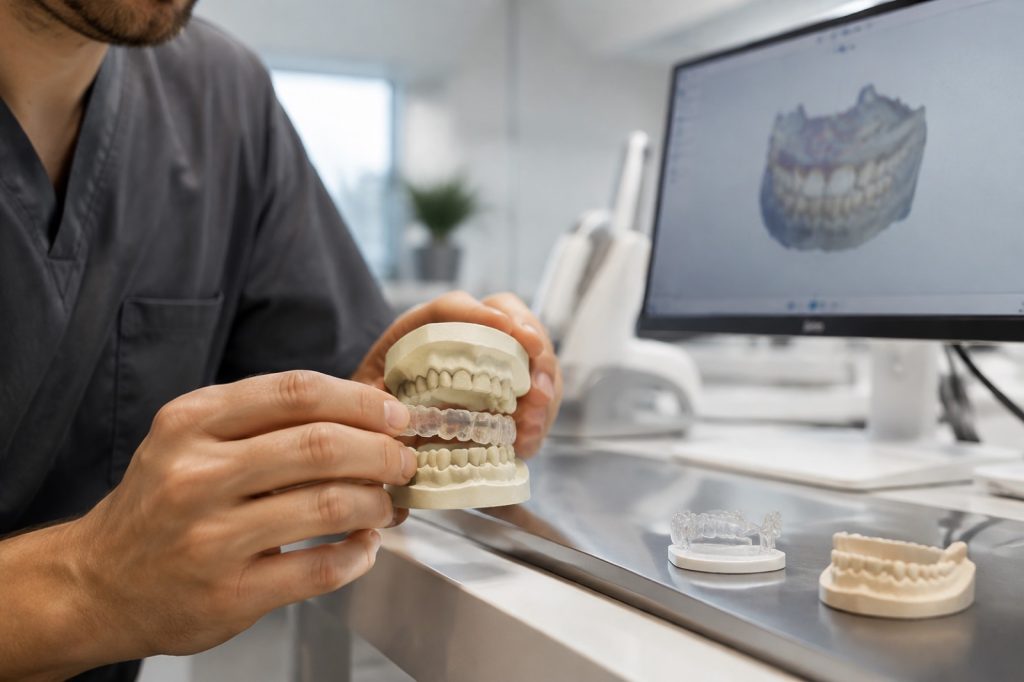
We take high-resolution 3D imaging to look closely at the condition of your jaw joints.
4. Personalized Therapy Plan
We present a conservative, step-by-step management plan designed to relieve your specific symptoms.
Relief
Focused Relief in Dearborn
When Dr. Mohammad Hammoud evaluates jaw pain, he images the joints on our in-house CBCT rather than referring you out for a scan and waiting two weeks on a report. We do not rush into aggressive treatments. Most TMJ disorders improve with reversible therapies like custom splints and muscle relaxation, which is why we start there rather than with anything that changes your teeth.
FAQ
TMJ Therapy FAQs
How long does TMJ therapy take to work?
Some patients experience significant relief from muscle tension within a few weeks of wearing a custom splint, while joint inflammation may take several months of conservative management to fully calm down.
Do I need surgery for my TMJ pain?
It is highly unlikely. The vast majority of TMJ disorders are successfully managed with non-surgical therapies. Surgery is considered an absolute last resort.
Can stress cause TMJ pain?
Yes. High stress often leads to unconscious jaw clenching and teeth grinding, which exhausts your chewing muscles and strains your jaw joints.
Will my jaw ever stop clicking?
If the sound is caused by a displaced disc, it may never completely go away. What we aim for is getting the pain out of it and your range of motion back, which is achievable far more often than silencing the joint is.
If jaw pain, tension, or locking is making it difficult to eat, speak, or sleep comfortably, contact our Dearborn team today to schedule your comprehensive TMJ evaluation.