When Dr. Hammoud took over this practice, it ran on paper charts and film X-rays. All seven treatment rooms now run on digital charts, digital X-rays and intraoral scanners, with 3D CBCT imaging on site.
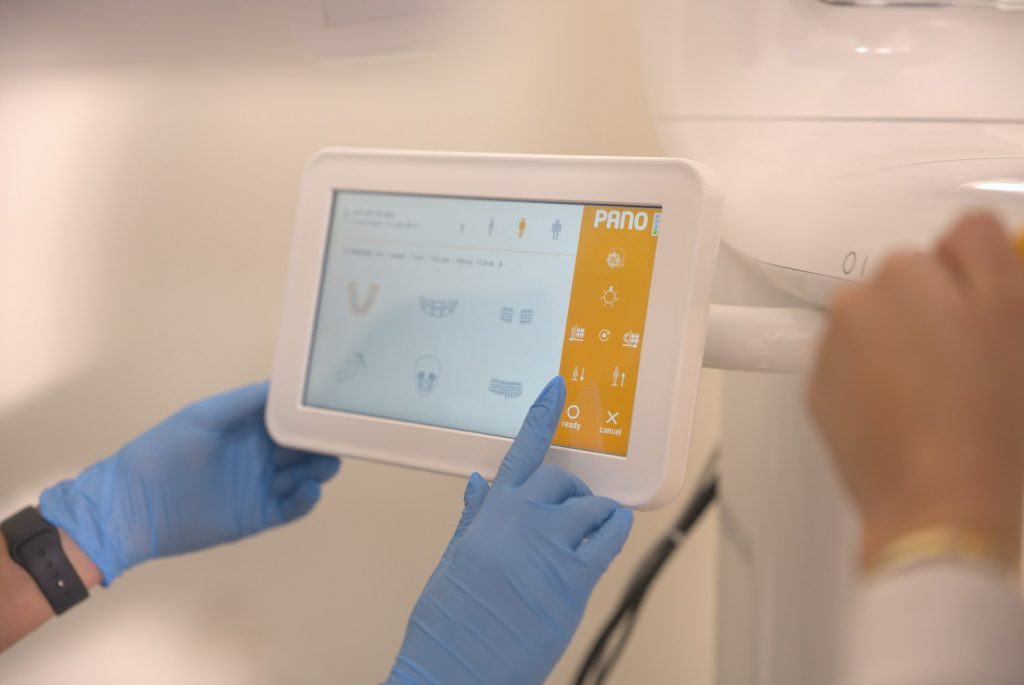
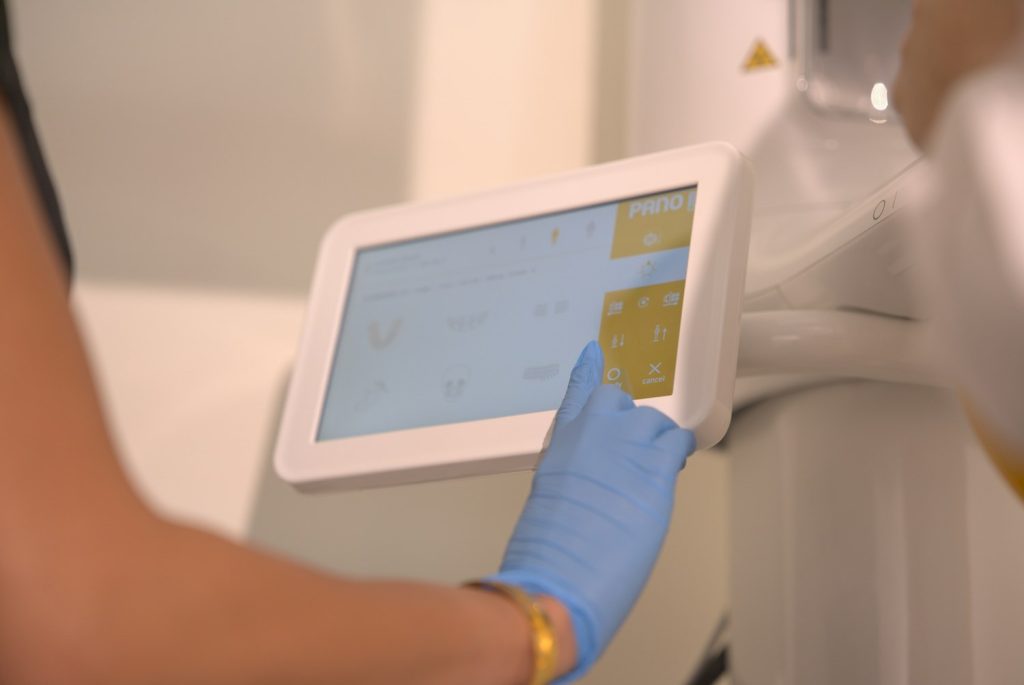
Standard dental X-rays provide a flat, two-dimensional picture that works well for spotting cavities between teeth. However, complex procedures require a deeper understanding of your anatomy.
Our Ray America cone beam CT (CBCT) scanner was one of the first big investments we made after Dr. Hammoud took over. It captures detailed, three-dimensional views of your upper and lower jaws. More on our 3D CBCT Imaging page.
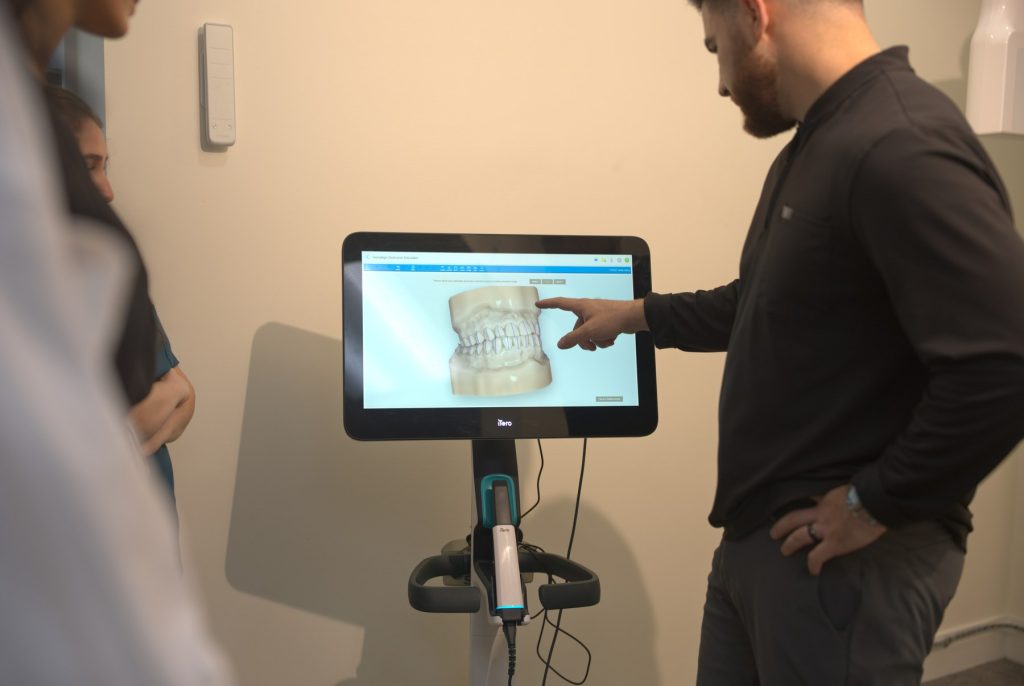
Traditional impression trays filled with putty are messy and often trigger a gag reflex. We use two digital scanners instead: an iTero for Invisalign and a second scanner for crowns, bridges and dentures.
Our iTero intraoral scanner builds a detailed 3D model of your teeth and bite from a quick scan. We use this system primarily for Invisalign planning. The software generates chairside outcome simulations, allowing you to see how your teeth can shift before your clear aligners are manufactured.
For crowns, bridges, and partial or complete dentures, we use a dedicated restorative intraoral wand. This device captures clean digital margins along prepared teeth, giving our dental lab partners an accurate digital model to make your restoration from.
Routine preventive visits rely on sharp, dependable imaging. We use digital X-ray sensors that transfer radiographs to our computer monitors in seconds. More on our Digital X-Rays page.
Our Dearborn office includes installed Phrozen 3D printers as we prepare to expand our digital capabilities. While we configure this equipment for future use, we partner with specialized dental laboratories to carefully craft all of your custom dental work.
Visit our clinic at Michigan Avenue and Telegraph to see how our diagnostic technology supports your dental health.
Reviewed by Dr. Mohammad Hammoud, DMD – 313 Dental, Dearborn, MI