Home > Services > Oral Surgery > Socket Preservation
Protect your jawbone and prevent natural bone shrinkage immediately following a tooth extraction to secure your future smile.
Socket preservation, or alveolar ridge preservation, is a proactive grafting procedure performed right after a tooth extraction to minimize natural bone loss and maintain jaw contours. When a tooth is removed, the surrounding bone normally begins to resorb. We help you address:
Approach | When Performed | Primary Benefit |
|---|---|---|
Socket Preservation | Immediately at the time of tooth extraction | Prevents natural bone collapse and secures ridge volume for future implants |
Delayed Bone Grafting | Months after a previous extraction site has already healed and shrunken | Rebuilds lost bone volume when a site was left un-grafted initially |
Standard Extraction Only | Left to heal naturally without grafting material | Results in predictable bone resorption and potential loss of ridge width |
We extract your compromised tooth carefully to keep the surrounding socket walls intact and healthy.
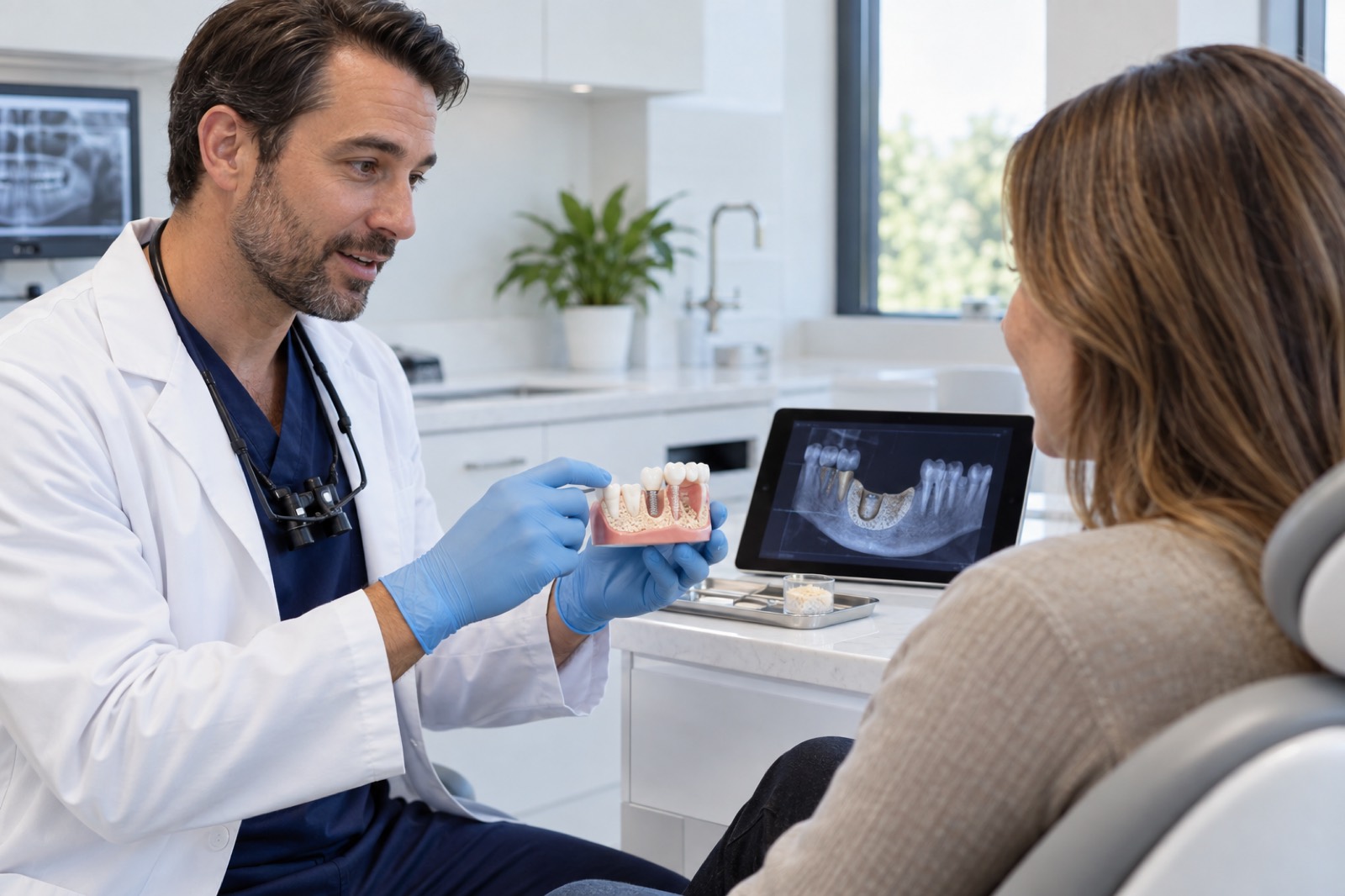
We evaluate the empty socket using advanced digital imaging to verify the dimensions needed for grafting.
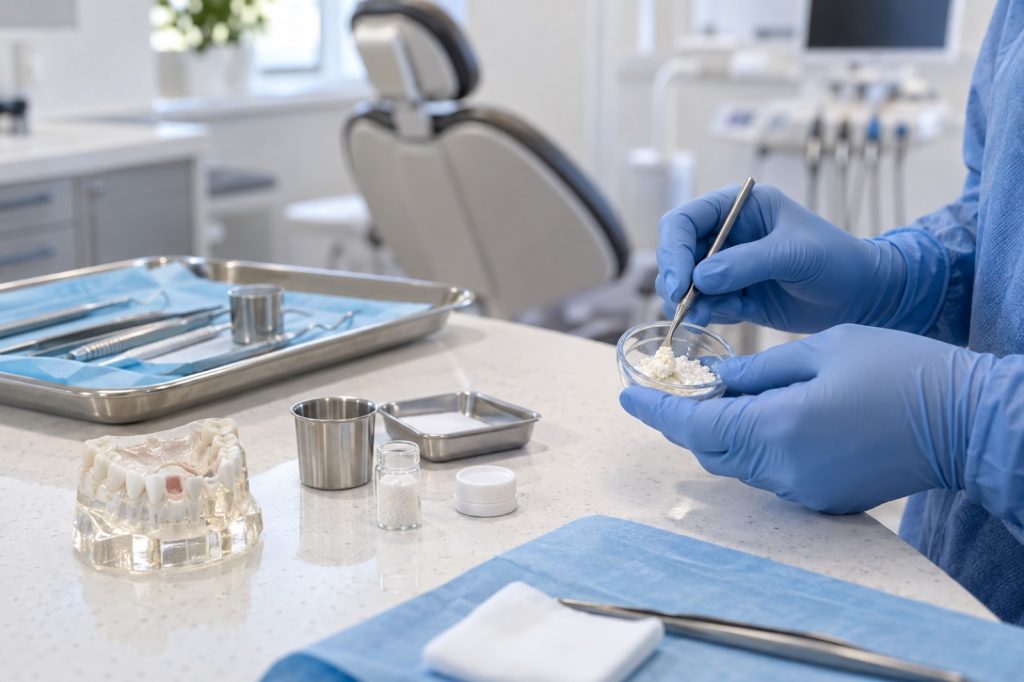
We place biocompatible bone grafting material directly into the socket and secure it with a protective membrane.
We provide clear aftercare instructions while your body integrates the graft to form a dense, stable ridge.
When Dr. Mohammad Hammoud performs an extraction, he looks ahead to your long-term restorative goals. Leaving an extraction socket empty almost always results in significant bone loss, making future dental implants more complex or requiring extensive secondary grafting. By performing socket preservation right away, we protect your jawbone architecture and make your future restoration smoother and more predictable.
Without a graft, the empty jawbone naturally resorbs and shrinks as it heals; preservation maintains that bone volume for future dental implants.
Yes. We place the bone grafting material into the empty socket immediately after removing the tooth, saving you from a separate surgical procedure.
It should not. The procedure is performed under local anesthesia right after your extraction, while the area is already numb.
While initial soft tissue closure happens quickly, the bone graft typically integrates fully over three to six months.
If you need a tooth removed and want to protect your jawbone for a future implant, contact our Dearborn team today.
Reviewed by Dr. Mohammad Hammoud, DMD – 313 Dental, Dearborn, MI